Credits for Jordan Lake watershed projects
B. Everett Jordan Lake supplies drinking water to Cary, Apex, Morrisville and other Triangle communities, and it has struggled with excess nutrients since it filled in the early 1980s. The Jordan Lake Water Supply Nutrient Strategy requires new development in the watershed to limit both nitrogen and phosphorus in its stormwater and protects riparian buffers along the streams that feed the lake.
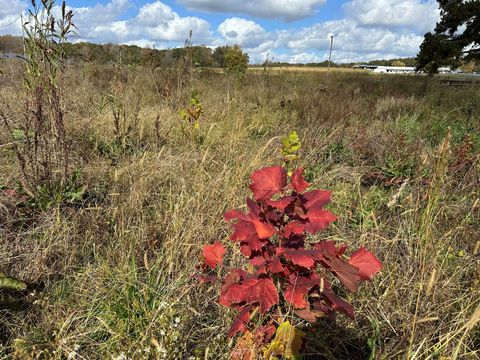
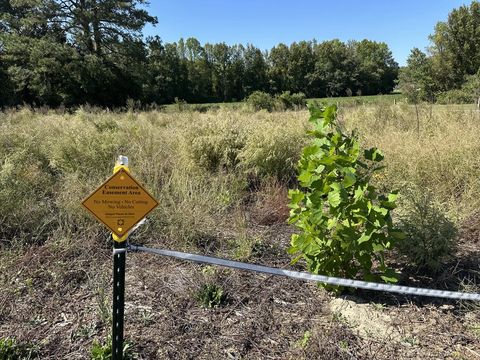
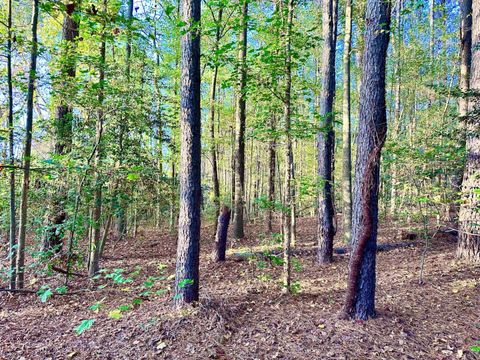
RestorEcology’s Bandit Farms Mitigation Site in Orange County generates three kinds of credits for the watershed:
Sub-watersheds matter
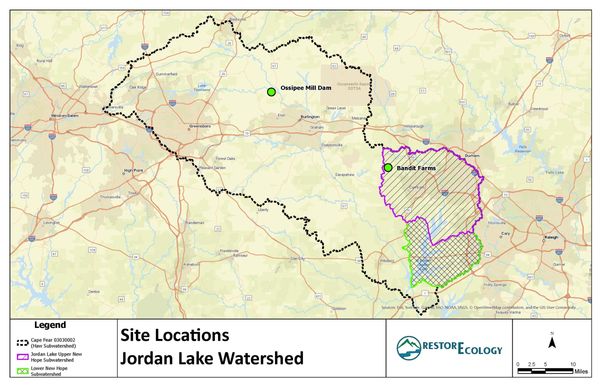
Jordan Lake is managed in three arms: Upper New Hope, Lower New Hope and the Haw River. Under the Jordan Lake rules, nutrient offset credits may only be used for impacts in the same sub-watershed where they were generated. Bandit Farms sits in the headwaters of Morgan Creek, so its credits serve the Upper New Hope arm, which includes Chapel Hill, Carrboro, southwest Durham, and parts of Orange and Chatham counties west of the lake.
The state’s in-lieu fee program has at times suspended new buffer and nutrient offset applications in the New Hope arms. When that happens, private banks like Bandit Farms are the practical path to compliance. Check the address of your project on our service-area map or ask us to confirm your sub-watershed.
Haw River: Ossipee Mill Dam Removal
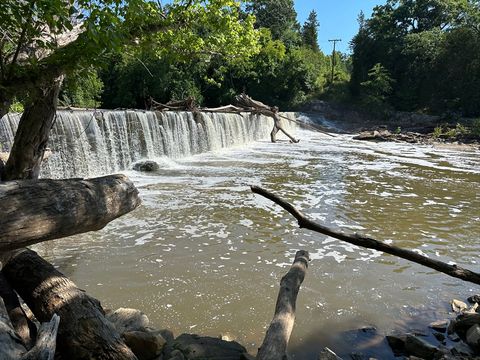
RestorEcology is also the mitigation bank consultant for the Ossipee Mill Dam Removal on Reedy Fork, a tributary of the Haw River northwest of Burlington. Removing the late-1800s dam will restore natural flow to more than 13,800 linear feet of river in the Haw River sub-watershed. Credit types and timing depend on agency approval; contact us if you anticipate mitigation needs in the Haw.
How to buy
Request a quote with your project location and the pounds of nitrogen and phosphorus or square feet of buffer your permit requires. We confirm the sub-watershed and availability by email, invoice you, and deliver a Credit Transfer Certificate and ledger copy once payment is received.