The problem the rules are solving
Nitrogen and phosphorus are fertilizer. In a river or reservoir they feed algae, and too much algae means fish kills, taste-and-odor problems in drinking water, and violations of water-quality standards. North Carolina has four watersheds where the state decided the nutrient load had to come down and stay down: the Neuse River basin, the Tar-Pamlico River basin, Falls Lake and Jordan Lake. Each has a nutrient strategy, a package of rules that assigns reductions to agriculture, wastewater plants, existing development and new development.
The new-development rules are the ones that create nutrient offset credits. They say, in effect: a new subdivision, shopping center or industrial site may not export more than a set number of pounds of nitrogen (and, in Jordan Lake and Falls Lake, phosphorus) per acre per year in its stormwater.
Step one is always on-site treatment
Before anyone buys a credit, the site has to do what it can on its own. Engineers calculate the project’s nutrient export using the state’s accounting tools, then design stormwater control measures to bring it down: bioretention cells, wet ponds, constructed wetlands, permeable pavement, disconnected impervious area and so on. Each measure is credited with a percentage removal.
The rules set a floor. In the Neuse basin, for example, a project generally must get its nitrogen export down to a specified level on site before offsets may be used for the rest; the same idea applies in Jordan Lake with sub-watershed-specific targets. Your local stormwater reviewer will tell you the exact numbers for your jurisdiction.
What an offset credit actually is
Once the on-site design is done, the gap between the site’s export and the target is a number in pounds per year. The rules allow that gap to be closed by paying for an equal, permanent reduction somewhere else in the same watershed. That reduction, once approved by the NC Division of Water Resources (DWR), is a nutrient offset credit.
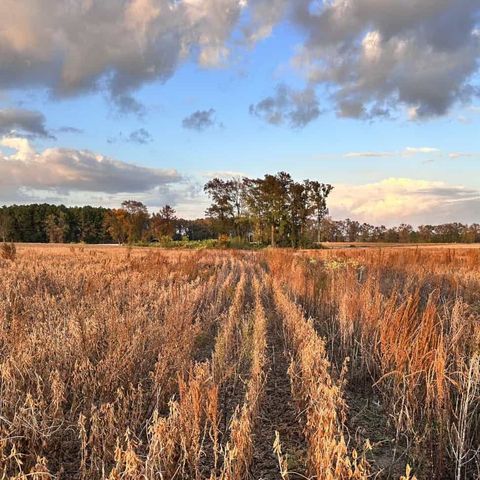
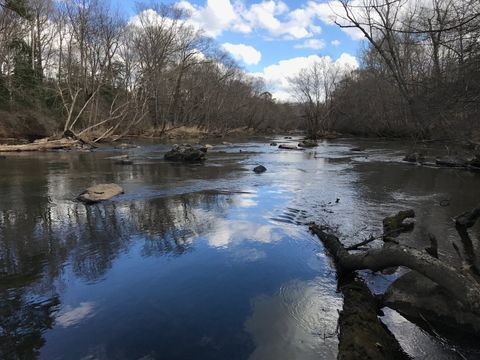
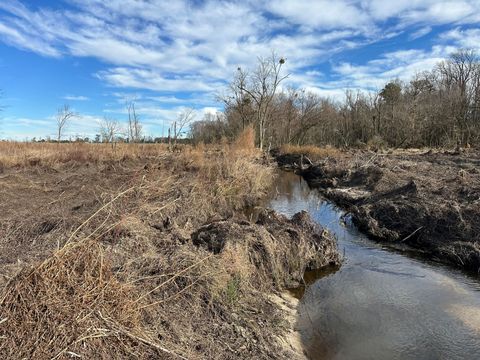
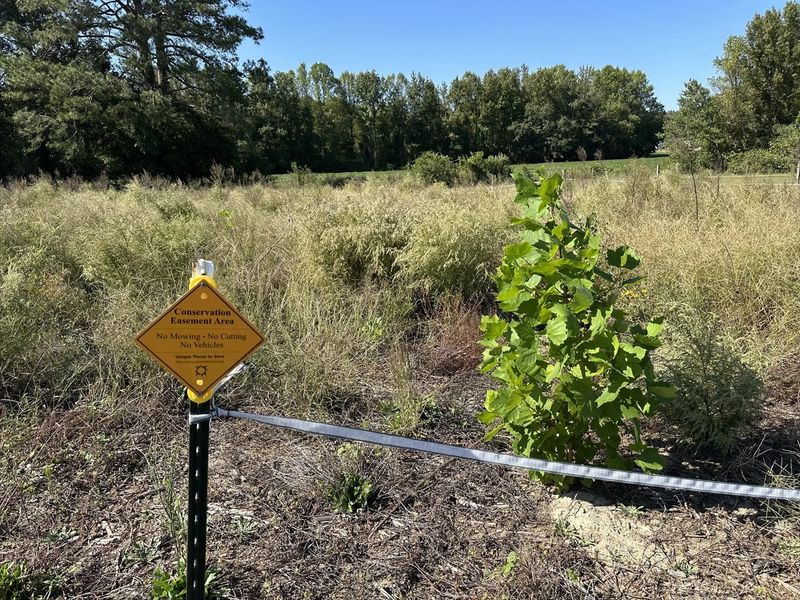
Where do the reductions come from? Overwhelmingly from taking cropland or pasture along streams out of production and planting it in native trees. Farm fields leak fertilizer to the nearest ditch; a forested buffer intercepts that runoff, takes up nutrients and holds the soil. DWR’s crediting methods assign pounds of nitrogen and phosphorus to that land-use conversion based on the acreage and site conditions, and a recorded conservation easement plus an endowed steward make the change permanent. That is precisely what RestorEcology does at sites like Brooks Swamp and Bandit Farms.
Where you can use a credit
Rule 15A NCAC 02B .0703 governs credit trading, and its central constraint is geography. Credits must be generated in the same watershed as the impact, and in Jordan Lake and Falls Lake in the same sub-watershed (Jordan Lake has three: Upper New Hope, Lower New Hope and Haw River). A Neuse credit from Wayne County can serve a project in Raleigh because both drain to the Neuse below Falls Lake Dam; it cannot serve a project in Durham that drains to Falls Lake.
RestorEcology’s service-area map lets you type in a project address and see which of our areas it falls in.
Who sells them
Two kinds of sellers exist:
- The state’s in-lieu fee program, run by the Division of Mitigation Services (DMS). You pay a published per-pound rate, DMS gives you an acceptance letter, and DMS goes and builds the reduction later. Rates are adjusted at least annually and carry premiums in the Neuse below Falls Lake, Jordan Lake and Falls Lake watersheds.
- Private providers whose projects DWR has approved. The restoration is already built and approved, the credits are on a ledger, and the seller transfers a specific number of pounds to you.
Both satisfy the rule. The practical differences are availability, price and paperwork speed. Read our comparison of private banks and the DMS in-lieu fee program for the details.
How the purchase works
With RestorEcology the sequence is short:
- You send an inquiry with the project location and pounds required.
- We confirm the service area and email a quote.
- You confirm; we invoice.
- On payment we issue a Credit Transfer Certificate for your permit file and a copy of the DWR-approved ledger showing the debit.
Your local government or DWR reviewer accepts the certificate as proof that the offset requirement is met.
Common questions
Is there a minimum? No. Offsets are sold to the fraction of a pound your calculation requires.
Nitrogen or phosphorus? Neuse projects need nitrogen only. Jordan Lake projects need both, and the two are sold separately.
How long does it take? Quotes typically go out within a business day; the certificate follows payment. Tell us your deadline.
Do I need a credit for redevelopment? Often not, or not as much: the rules treat redevelopment differently from greenfield development. Your reviewer will confirm.
For nitrogen credits in the Neuse basin or nitrogen and phosphorus credits in Jordan Lake’s Upper New Hope arm, see our nutrient offset credits page or request a quote.