What the buffer rule protects
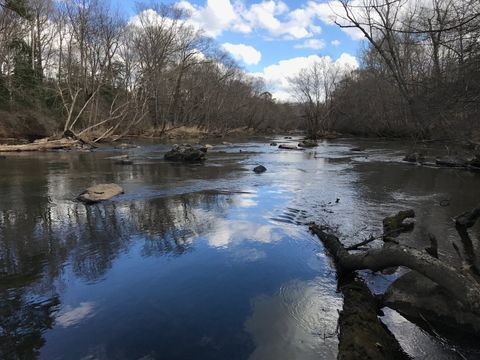
The Neuse riparian buffer rule protects a 50-foot vegetated buffer along both sides of intermittent and perennial streams, and around lakes, ponds and estuarine waters, throughout the Neuse River basin. The rule applies to features shown on the most recent USGS 1:24,000 topographic map or county soil survey, or as determined on the ground by the NC Division of Water Resources (DWR) or a delegated local government.
The buffer is split into two zones measured from the top of the stream bank:
- Zone 1 is the inner 30 feet. It is meant to stay undisturbed and forested.
- Zone 2 is the outer 20 feet. Vegetation must be maintained, but grading and some uses are allowed.
Exempt, allowable, or allowable with mitigation
The heart of the rule is a table of uses. Each activity you might need in a buffer falls into one of four categories:
| Category | What it means |
|---|---|
| Exempt | You can do it without authorization. Examples include many existing uses and small perpendicular crossings. |
| Allowable | You need a buffer authorization from DWR or your delegated local government, but no mitigation. |
| Allowable with mitigation | You need an authorization and must compensate for the buffer lost. |
| Prohibited | Not permitted absent a variance. |
Road crossings are the classic case. A narrow perpendicular crossing may be exempt or allowable; wider crossings and crossings that run along the stream rather than across it typically land in allowable with mitigation. Utility lines, stormwater outfalls, greenways and grading in Zone 1 for development are other common triggers. Always confirm the current table for your specific activity; the categories and thresholds are spelled out in the rule text.
How much mitigation you owe
Buffer mitigation is calculated in square feet, not linear feet, and the multiplier depends on the zone:
- Impacts to Zone 1 are mitigated at 3:1. Disturb 1,000 square feet and you owe 3,000 square feet of mitigation.
- Impacts to Zone 2 are mitigated at 1.5:1.
Your buffer authorization will state the total square footage required. The numbers add up quickly on a wide road crossing, but they are usually a small line item compared with the rest of a project’s budget.
Your three options to provide it
- Permittee-responsible mitigation. Restore or enhance buffer yourself elsewhere in the watershed, then monitor and protect it. Practical only for large projects with suitable land.
- Pay the state’s in-lieu fee. The Division of Mitigation Services accepts a per-square-foot payment and provides the mitigation later, subject to availability.
- Buy credits from a private buffer mitigation bank. A DWR-approved site has already restored and protected the buffer; the bank transfers square feet from its ledger to your authorization.
Mitigation must be located in the same river basin as the impact, and DWR’s mitigation rule sets a preference for keeping it close to the impact site.
Where RestorEcology’s Neuse buffer credits can be used
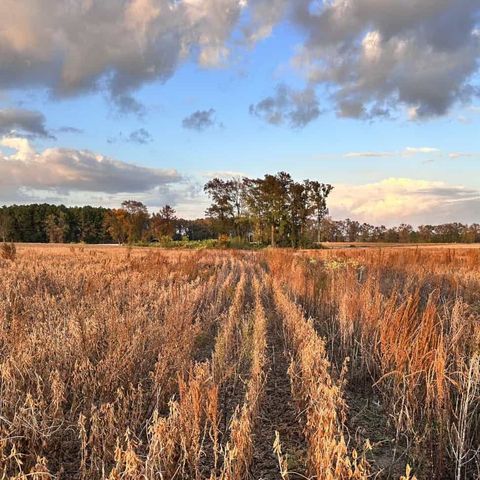
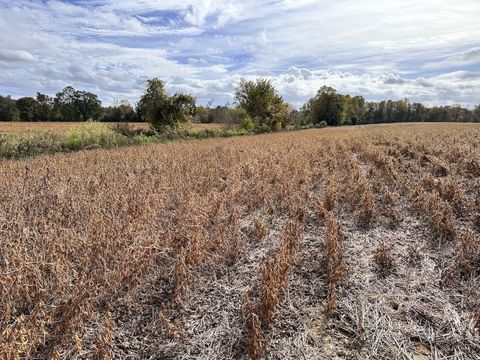
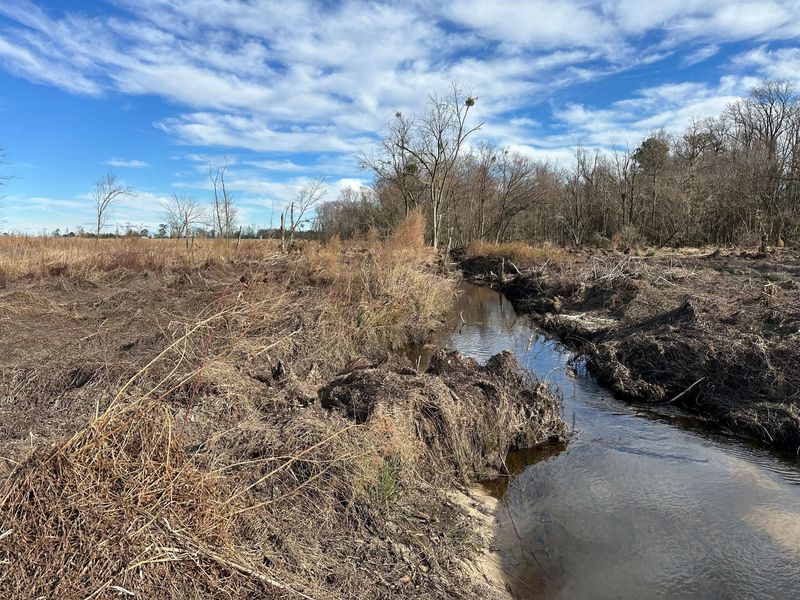
RestorEcology holds approved Neuse buffer credits at three Wayne County sites: Brooks Swamp, Green Heron and Sand Hill. Their service area is the Neuse River basin cataloging unit 03020201, the part of the basin below Falls Lake Dam, which includes Raleigh, Garner, Clayton, Smithfield and Goldsboro. The Falls Lake watershed is excluded; it has its own rules.
Type your project address into our service-area map to check.
What you receive
After payment we issue a Credit Transfer Certificate identifying the impact site, the square footage and the bank, plus a copy of the DWR ledger showing the debit. Attach it to your buffer authorization and you are done.
Ready to price out a crossing? Request a quote or read more about riparian buffer credits.